
Loading page content…
Charlotte turns meeting notes into follow-up tasks
Connect meeting commitments with specialist help, then review the work against what was agreed.
Developer project · Proposed Act workflow.
The build.
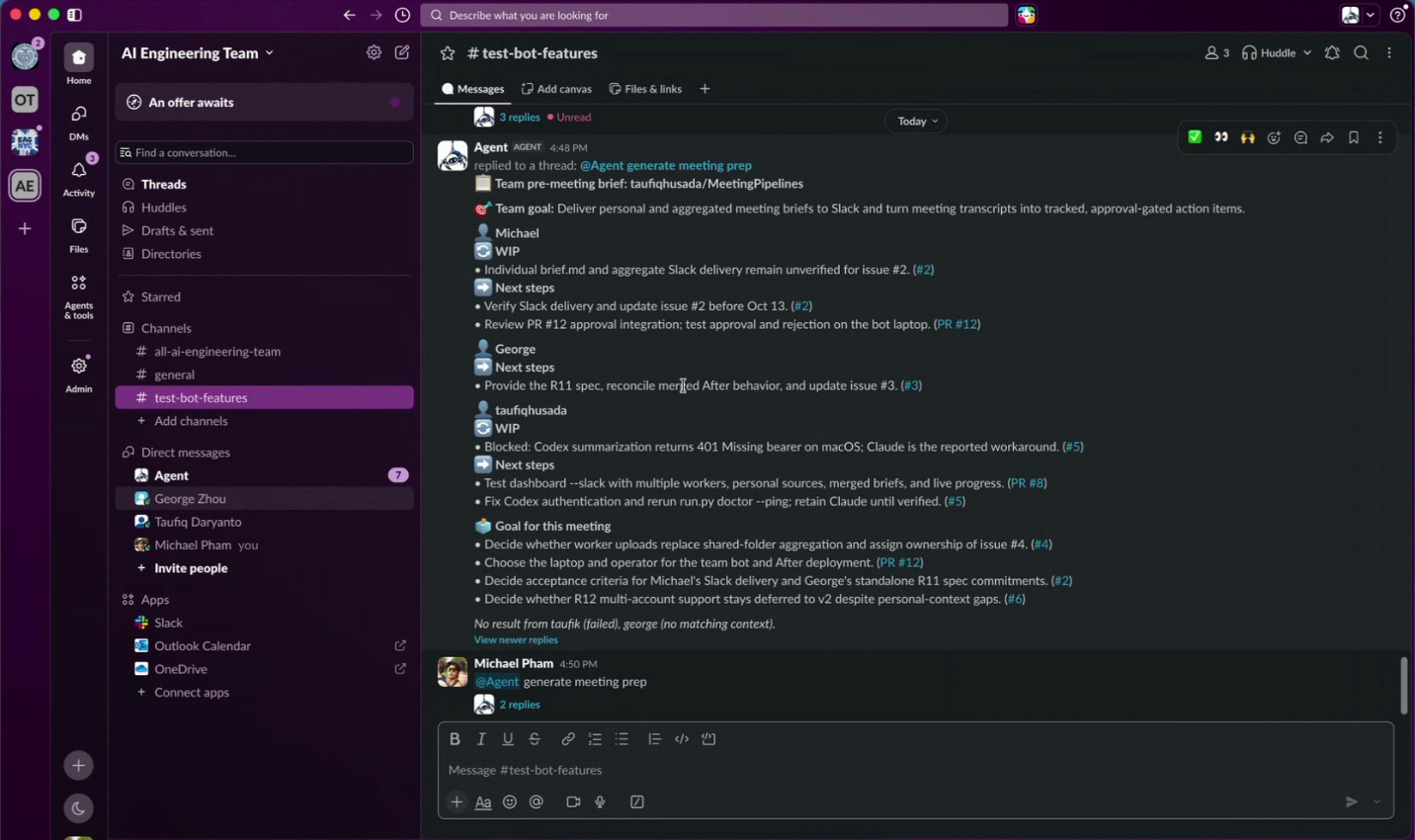
Charlotte combines a Python meeting pipeline, a FastAPI interface, and Slack. Pre-meeting briefs can use Claude Code or Codex; post-meeting analysis uses the Anthropic SDK. Darwin Search and Act are called directly with httpx, with Act dependent on access and agent availability.
 Python
 Slack.
The brief
Charlotte turns meeting notes into follow-up tasks and looks for agents that can help carry out the agreed work.
Finding the right capabilities
Darwin matches each follow-up with relevant capabilities. Charlotte keeps commitments separate from suggestions and links tasks to their source notes.
Coordinating the work
A task owner could approve a specialist request with a deliverable and due date. Returned work would be checked against that commitment.
What comes back
Follow-ups with owners, source notes, and results to review. The owner accepts the work before the task is marked complete.
The plan, step by step
- 1
Find help for the follow-ups.

Search. Match capabilities to the follow-ups recorded in the meeting notes.
Act. Clarify deliverables and required inputs without turning suggestions into commitments.
Outcome. Follow-up proposals with source notes, expected outputs, owners, and agent options.
- 2
Agree on the work.
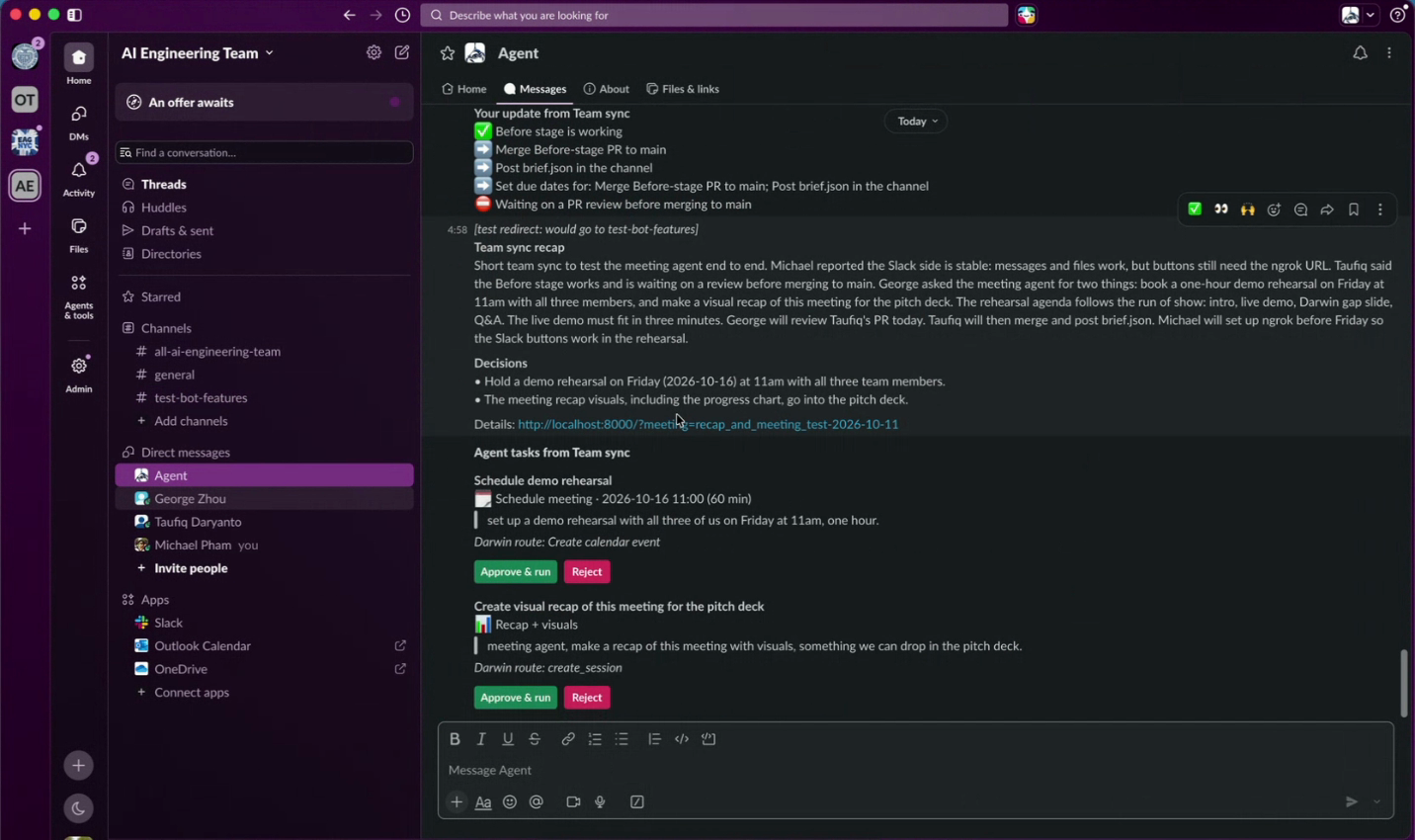
Search. Select a specialist after the task owner resolves ambiguous instructions.
Act. Send the accepted task with its deliverable, due date, and approved notes.
Outcome. A result linked to the meeting commitment, with questions for its owner.
- 3
Review the follow-through.
Search. Compare the result with the agreed follow-up and identify remaining work.
Act. Request revisions and prepare a status update for the task owner.
Outcome. The result, unresolved questions, and an acceptance or revision decision.
Completion review.
Trace each result back to the meeting commitment and the person responsible for accepting it.
Follow-up proposals
Deliverable: Follow-up proposals with source notes, expected outputs, owners, and agent options.
Review criteria: Separate agreed decisions from suggestions. Keep every proposed task linked to its note.
Original prototype by Michael Pham and George Zhou and Taufiq Husada Daryanto. The team can approve or reject proposed follow-ups directly in Slack.
Task result
Deliverable: A result linked to the meeting commitment, with questions for its owner.
Review criteria: Proceed only with this accepted task. Return scope or timing changes to its owner.
Completion review
Deliverable: The result, unresolved questions, and an acceptance or revision decision.
Review criteria: Do not mark the task complete until its owner accepts it. Keep unresolved decisions visible.


